
Fast Food for the Art World
When did doing the same thing over and over become the definition of artistic excellence?
Somewhere along the way, the commercial art world developed a peculiar appetite for artists who do ONE THING. One recognizable image, one reliable palette, one signature gesture, repeated until the gallery, the collector and the artist can identify the product without troubling themselves to look.
The signature becomes a brand. The brand becomes a formula. The formula becomes a sausage factory, and everyone gets fed.
Whether anyone is nourished is another question.
Would an actor who only ever played one character be considered exceptional? A chef who cooked one dish for thirty years? Perhaps. But wouldn’t we be curious about the rest of the menu? And what of the diner who’s never eaten anything else?
Recognition is not understanding. Familiarity is not depth. And repetition is not necessarily mastery.
Imagine Picasso approaching a contemporary commercial art gallery.
Blue Period. Rose Period. Cubism. Neoclassicism. Sculpture. Ceramics.
“Pablo, you’re clearly talented, but we’re looking for artists who do one thing exceptionally. Your portfolio is all over the place. Have you considered hiring a marketing professional?”
Next!
Monet might fare better, provided he stuck to the water lilies. Never mind the haystacks, cathedrals, fields and trees, early figurative paintings or the extraordinary dissolution of form in his later work.
Magritte? The man behind the apple. At least he had the good sense to keep painting bowler hats. Although the philosophical and metaphysical questions might confuse the clientele.
And what if the Beatles had been told to stick to Please Please Me? No Revolver, no Sgt. Pepper, no Abbey Road, Just four lads in matching suits, endlessly polishing the same three-minute love song, withholding decades of change. A perfectly marketable proposition. And a terrible loss.
Then there are Jean-Michel Basquiat and Keith Haring, supernovas whose brief lives coincided with an extraordinary time and place, who both developed unmistakable visual languages while still young. Imagine what another thirty years of life, experimentation and changing circumstances might have produced. We never got to see their later work.
The irony is that art marketing now packages these artists into instantly recognizable brands, mostly forgetting the curiosity, experimentation and disruption that made them significant.
Yesterday’s artistic revolution becomes tomorrow’s museum-shop refrigerator magnet.
Walk through the commercial art galleries of Santa Fe, Carmel, or almost any established art destination, and you’ll encounter an impressive buffet of visual fast food.
The same types of sunsets. The same decorative abstractions. The same physical sculptures and spiritual horses. The same types of atmospheric landscapes promising transcendence in a selection of sizes.
Some of it is genuinely excellent. Much of it resembles the artistic equivalent of industrial meat: antibiotic-filled, processed, seasoned, attractively packaged and designed to deliver the same bland satisfaction every time. With a little local garnish and a statement about universal energy, and perhaps some gold leaf or bartop epoxy to make it shiny for those who think that is luxurious.
Would you like fries with your transcendence?
There’s nothing wrong with a beautiful painting that suits a room. Original contemporary art can enrich an interior enormously. However, the ability to complement upholstery can’t honestly be confused with artistic achievement.
Taste develops through experience. Art can be truly nourishing or merely filling a hole.
There’s a big difference between an educated eye and one that simply likes the first thing it recognizes.
Through looking, questioning, encountering unfamiliar work and occasionally discovering that something you initially disliked has become indispensable.
Art collecting, like good food, can be an education in itself. The more you experience, the more discriminating your palate becomes.
Here’s the delicious irony. The commercial art market has spent decades rewarding artists for developing recognizable, repeatable visual formulas.
And now artificial intelligence arrives, exceptionally good at imitating recognizable, repeatable visual formulas. Who could have seen that coming?
If the defining characteristic of an artist’s work is a predictable combination of palette, composition and decorative effect, generative AI can approximate the recipe in seconds.
Another sunset? Coming right up.
Another odd looking ,supposedly spiritually significant horse? Would you prefer it in blue?
When the primary selling point is a reproducible look—when simulacra has replaced observation and discovery — reproduction becomes the competition. Perhaps the problem isn’t that machines are becoming more like artists, it’s that parts of the art market have spent decades encouraging artists to behave like machines.
Still, not all repetition is empty. Giorgio Morandi spent much of his life painting bottles, jars and ordinary vessels, finding extraordinary depth in apparently modest subjects. But Morandi kept looking. The paintings were investigations, not inventory.
The distinction isn’t between artists who work in one style and artists who work in several. It’s between those who continue discovering and those who have found a successful recipe and closed the kitchen.
A great painting should offer more than instant gratification. It should have something left to reveal after the first encounter, the tenth, perhaps even the thousandth. That’s slow food for the eyes. Less processed visual reassurance. More unexpected ingredients. Basically, something that rewards digestion.
For contemporary art collectors, perhaps a more interesting question than “Will this match my room?” is “Will I still be discovering something in this painting ten years from now?”
My own artistic practice has unfolded over three decades, through different landscapes, materials, scales and forms.
It began with an investigation into mineral pigments, oxidation and the physical behavior of matter. Metal compounds, crystallization and geological processes became part of the paintings themselves.
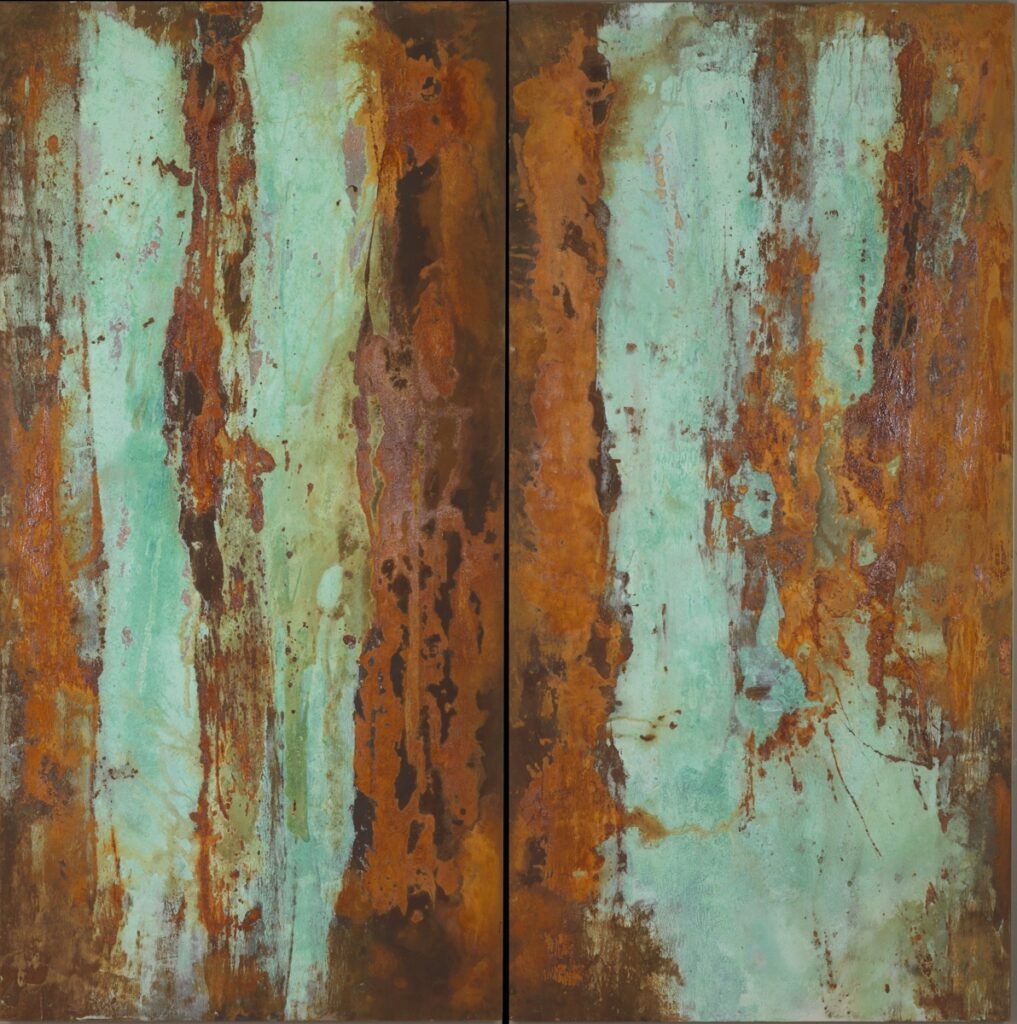
These discoveries opened into darker atmospheric fields, expansive mineral surfaces and, during my years on Monterey Bay, immense oceanic paintings shaped by the Pacific.
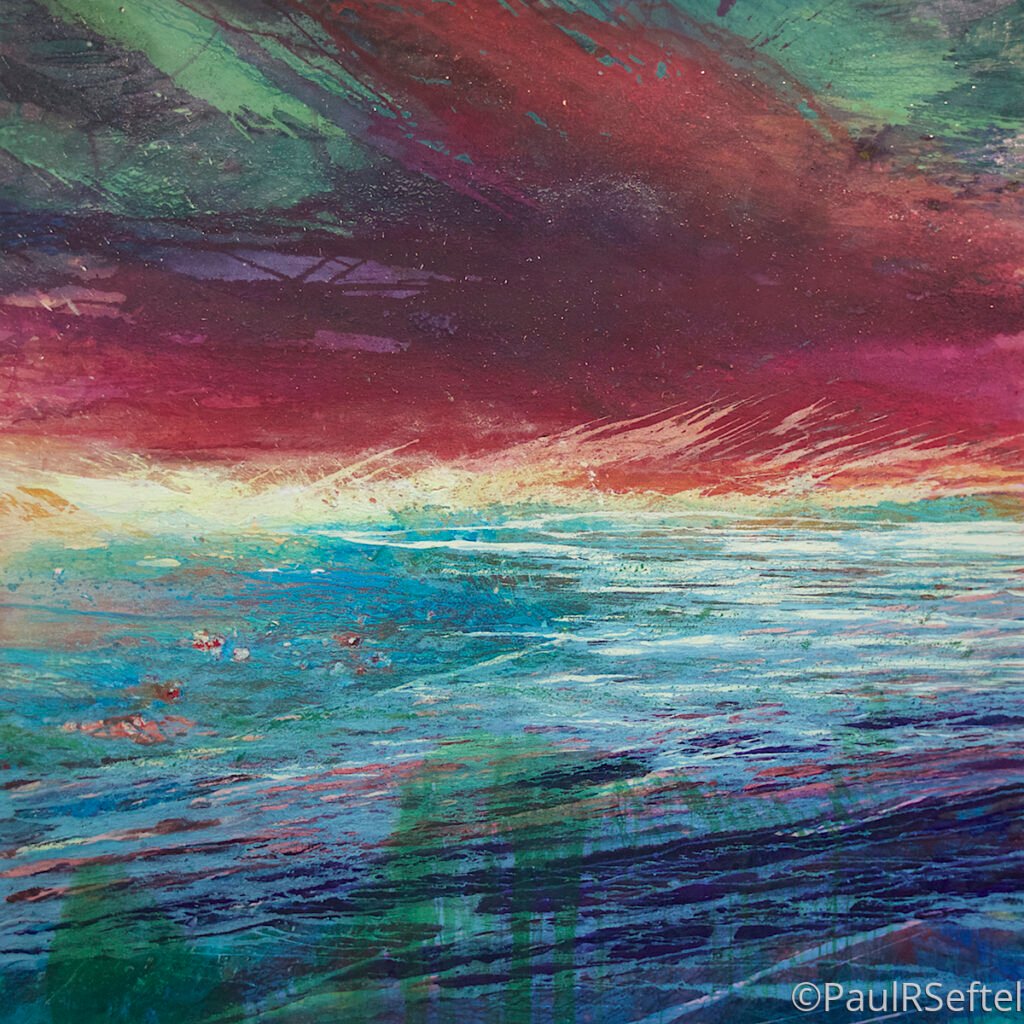
Returning to New Mexico brought another transformation: desert light, geological time, the dissolving horizon and phosphorescent pigments that allowed paintings to reveal an entirely different presence after dark.
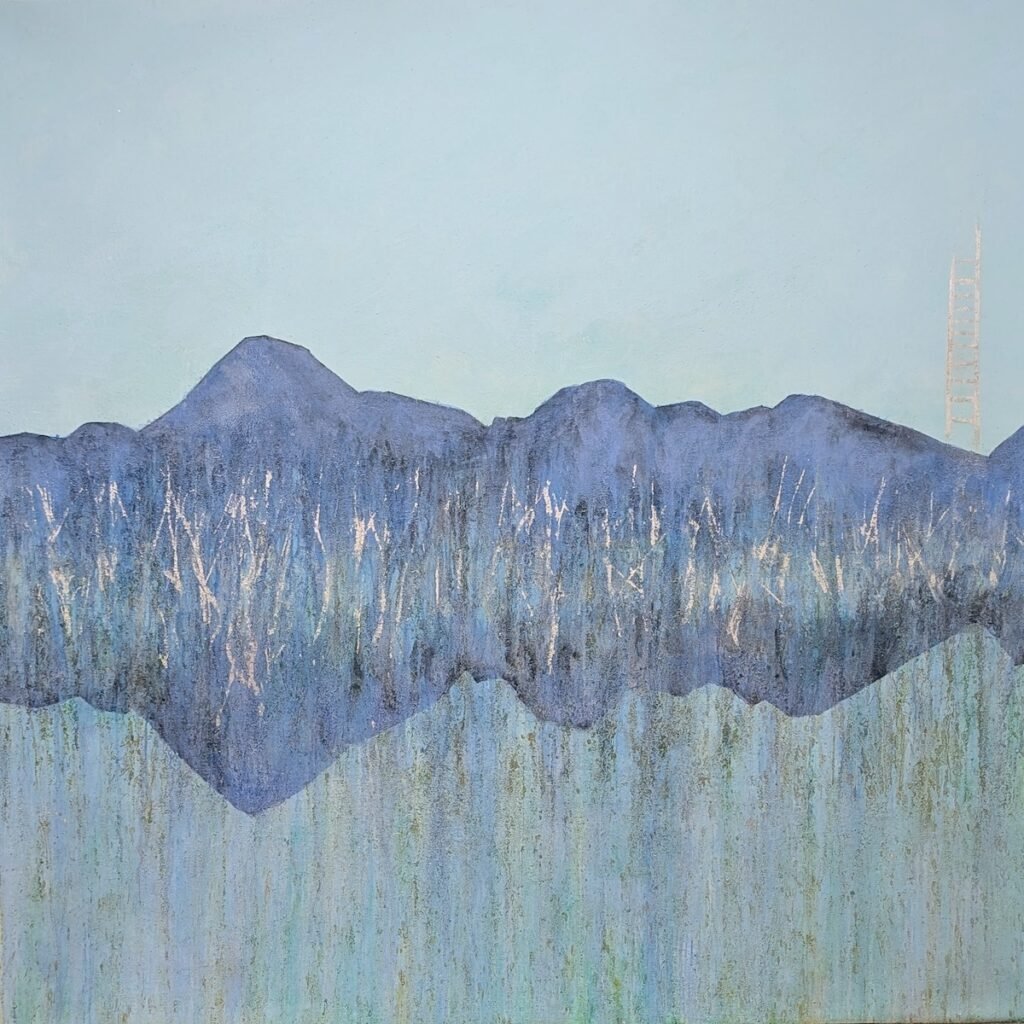
More recently, that investigation has moved into sculptural mineral paintings such as Parallel Worlds and Chasm, where matter, light and perception extend into architectural space.
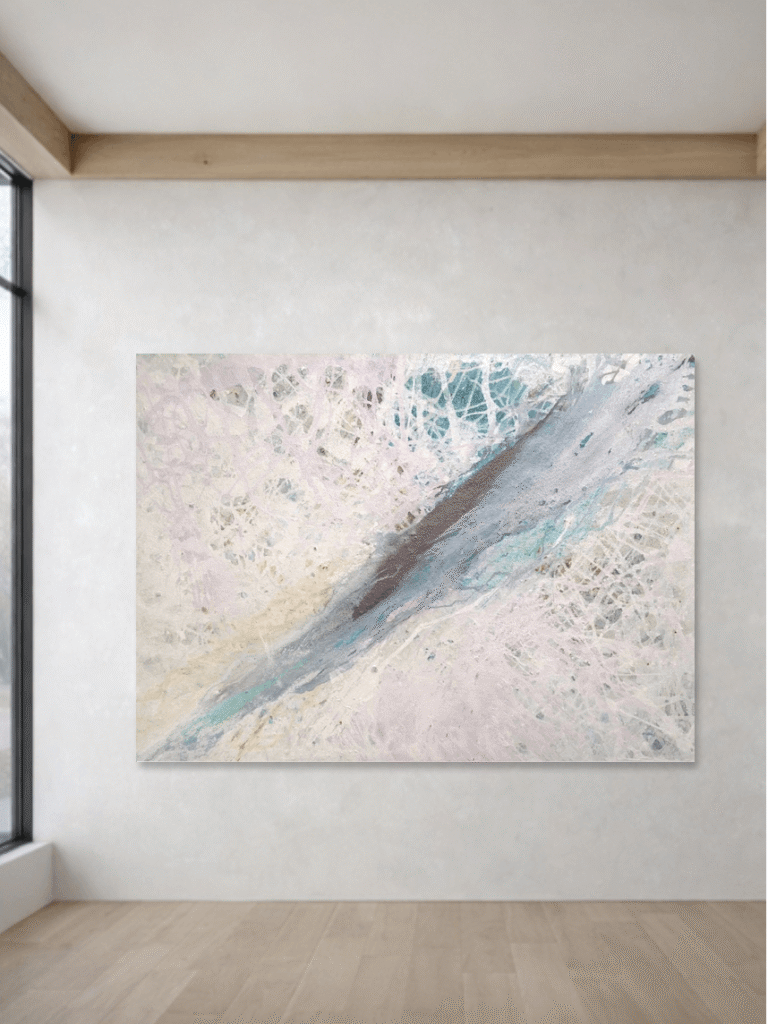
Different periods? Certainly. Different questions? Sometimes.
But one sustained investigation: what can materials reveal, what can light transform, and how does a surface become memory?
Each discovery has led to another. Not because I needed a new product line, but because the work itself opened another door. I would hope that after thirty years an artist has learned something, changed something, risked something, perhaps even surprised themselves. Otherwise, why bother?
The evolution of an artist’s work is not necessarily evidence of inconsistency. Sometimes it’s evidence that someone has been paying attention.
The Signature and the Sausage Factory
I do understand why commercial galleries favor recognizable work. It’s easier to market, easier to explain and easier to sell. Collectors know what they’re getting. Interior designers can specify it. The next painting looks reassuringly like the last. Not an unreasonable business model.
The trouble begins when the business model becomes the aesthetic philosophy. When recognizability is mistaken for originality, salesmanship for substance, and commercial success for artistic achievement. At that point, the artist risks becoming the brand ambassador for their own increasingly predictable product.
It’s easier to lose your way in the performance of success than to remain true to the work. And if you’re always playing a part, is there any self left to be true to? The sausage factory has acquired a celebrity chef.
A signature style can be the hard-won consequence of decades of artistic exploration. Or it can become a comfortable prison, with the artist sentenced to manufacture their first successful idea until they die.
The market prefers the familiar. Art history is often more interested in the exceptions. Sometimes the most revealing works in an artist’s lifetime are the strange anomalies between established series. The paintings that escaped being painted over, that didn’t fit the formula, that pointed somewhere the artist hadn’t yet expected to go. There are rarely many of them. But sometimes those odd survivors contain more discovery than a hundred perfectly recognizable paintings.
For collectors, the distinction matters. Are you acquiring a living investigation, a work with material and intellectual depth, or simply another helping of the house special? For artists, it matters even more. I have no interest in spending the next thirty years manufacturing yesterday’s discoveries in different sizes. I’d rather remain curious, make mistakes, follow the materials and occasionally burn dinner.
A signature is what remains recognizable through change. A formula is what refuses to change.
One is the residue of a lifetime spent looking. The other comes with fries.