Why Earthy Abstract Paintings Bring Warmth to Any Interior
There’s a reason we’re drawn to earth tones. They’re not just colors; they’re memories made visible.
Clay.
Stone.
Sunset.
The pigments that built civilizations and marked time before anyone thought to call it art.
Earthy abstract painting operates in that space between recognition and mystery. You know the colors. You’ve walked on them, touched them, watched them shift under changing light.
But when they gather on canvas, something unexpected appears. Earth and light abstract art transforms the familiar into something that breathes.
I don’t just paint with earth tones.
I paint with earth. Real minerals. Real geology.
The kind of pigments that carry the chemical signature of the land itself. That authenticity changes everything. It’s not just aesthetic; it’s elemental.
Fossil Memories
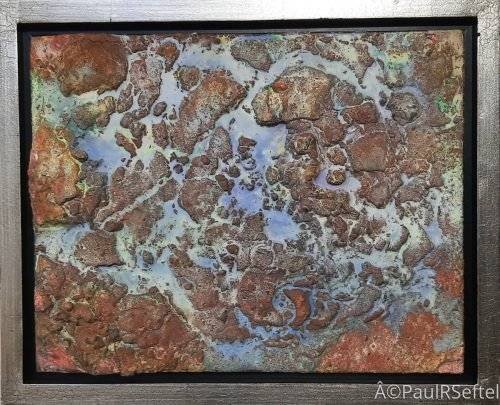
Some paintings feel like an excavation. Fossil Memories is one of those works —layer upon layer of sediment and story, pressed into a surface that holds time the way stone does.
The palette runs warm:
- ochre bleeding into rust
- cream settling into shadow
But it’s the texture that catches the attention of the collectors or visitors. Ridges rise and fall like ancient riverbeds. Mineral particles catch light and throw it back fractured, the way weathered rock does at golden hour.
This is an earthy abstract painting at its most honest. No tricks. No shortcuts. Just pigment, gesture, and the slow accumulation of material until the canvas becomes its own geography. You can almost read the strata, trace the history of how it came to be.
What collectors respond to in Fossil Memories is its refusal to be merely pretty. It’s compelling, yes. Beautiful, certainly. But there’s a rawness to it —an acknowledgment that earth isn’t gentle. It’s powerful. And when you invite that power into your interior, the space transforms.
The Magic Wand
If Fossil Memories speaks to what’s buried, Magic Wand is about what rises. This piece moves vertically, pulling earth tones upward into light —terracotta lifting into gold, sienna dissolving into amber.
The painting feels like a transition. Dawn, maybe. Or the moment when fire becomes sky. Earth and light abstract art lives in these threshold spaces, where one element becomes another, and both remain visible in the transformation.
I made a Magic Wand using natural materials that never show predictable results. Mica catches and scatters illumination. Limestone creates subtle shifts in opacity. The result is a surface that never looks the same twice. Morning light reveals one painting. Evening light reveals another. That’s the magic of working with actual earth pigments rather than synthetic approximations.
The Warmth Factor
Here’s what people get wrong about warmth in interiors: they think it’s about adding beige or nude tones. However, earthy abstract painting proves otherwise.
Warmth isn’t a color; it’s a presence.
These works bring warmth through texture, through depth, through the way they catch and hold light. They create visual anchors that make a space feel inhabited rather than decorated. They soften hard edges without sacrificing sophistication.
In contemporary interiors —especially those dominated by cool grays, whites, and industrial materials —earthy abstract painting provides crucial balance. It’s the counterweight to all that sleekness, the reminder that humans need organic irregularity as much as we need clean lines.
These masterpieces are not for decoration purposes, but create a great transformation. And it’s exactly what turns a house into a home, a room into a refuge, a wall into a window onto something deeper than design. I create these pieces knowing they’ll become part of someone’s daily ritual of looking, of pausing, of reconnecting with something elemental that modern life often strips away.
FAQs
What defines an “earthy” abstract painting?
Earthy abstract paintings feature color palettes drawn from natural earth pigments: ochres, siennas, umbers, terracottas, and warm neutrals. Many contemporary artists, including those working with minerals, incorporate actual earth materials like limestone, clay, or turquoise powder into their work, creating authentic geological textures. These pieces emphasize organic warmth and tactile depth rather than bright or synthetic colors.
How do earthy abstract paintings complement modern interiors?
They provide essential warmth and organic texture that balance contemporary design’s cooler, more industrial elements. In spaces dominated by concrete, steel, glass, or white walls, earthy abstract paintings introduce natural irregularity and visual warmth. They ground minimalist interiors without compromising their clean aesthetic, creating harmony between human-made precision and natural imperfection.
Where should I hang earthy abstract art for maximum impact?
Position them where natural light can interact with their textured surfaces throughout the day. Living rooms and bedrooms benefit most from the warmth these pieces provide. Avoid areas with harsh artificial lighting that flattens texture. Consider spaces where people gather or rest — earthy abstract paintings excel at creating atmosphere rather than making bold statements, making them ideal for intimate or social areas.